
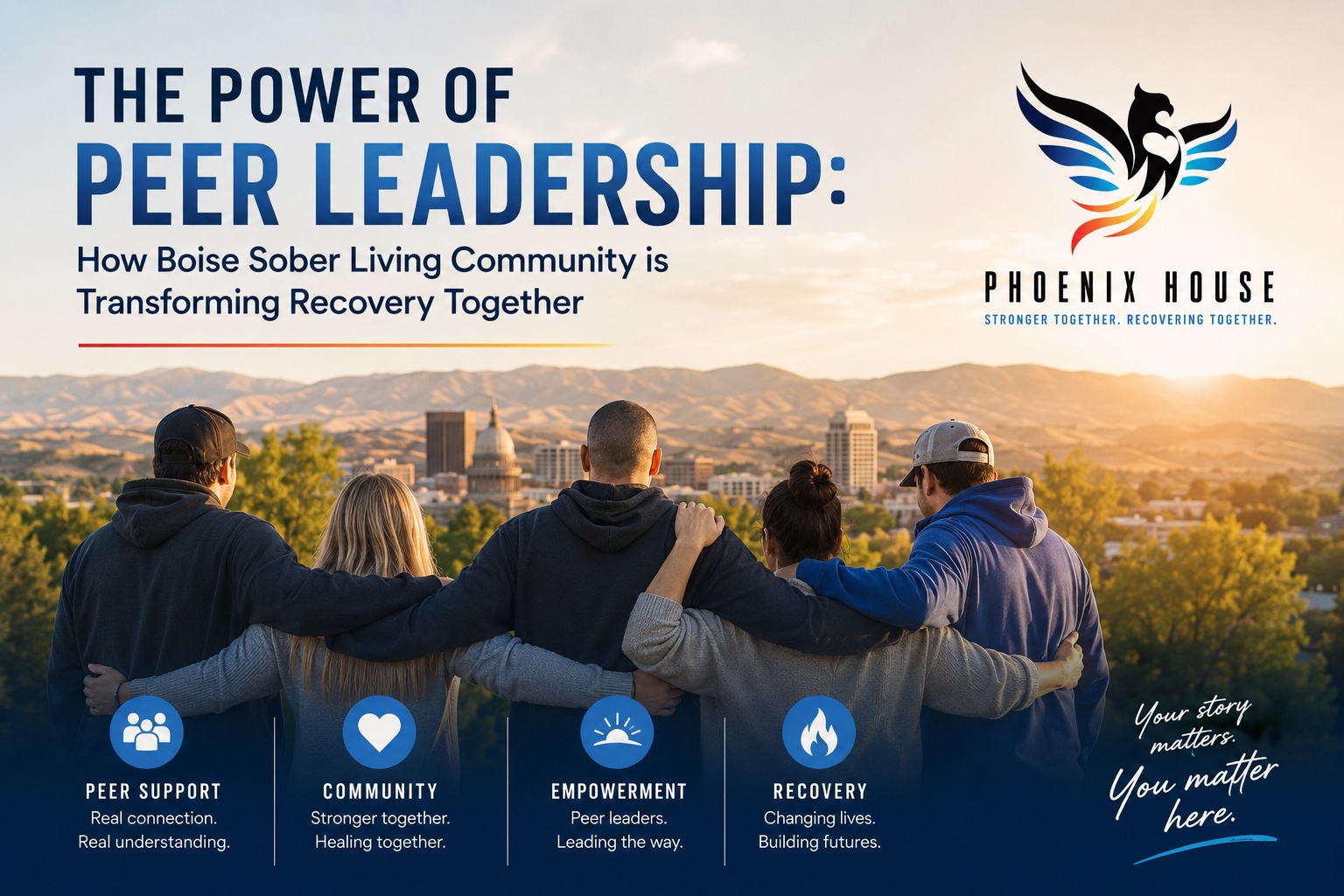
Recovery from addiction is deeply personal, but it doesn’t have to be a solitary journey. At the heart of every thriving Boise sober living community lies a powerful truth: the most transformative healing often happens when those who’ve walked the path of recovery guide others through it. This is the philosophy behind peer leadership programs—and it’s changing lives across our community.
What Makes Peer Leadership Different in Sober Living Communities?
When you’re searching for a sober living near me in Boise, you’re likely looking for more than just a safe place to stay. You’re seeking a community where genuine recovery happens, where people understand your struggles because they’ve lived them, and where hope isn’t just a concept—it’s demonstrated daily by those around you.
This is exactly what peer leadership training brings to men’s sober living and women’s sober living environments.
Peer leaders are individuals who have successfully navigated their own recovery journey and have chosen to invest in helping others do the same. Unlike traditional counselors or therapists (though those professionals are invaluable), peer leaders offer something uniquely powerful: lived experience, authentic understanding, and the proof that recovery is possible because they’re living it.
The peer leadership model recognizes a fundamental truth about human connection and healing: We change most powerfully in the presence of others who believe change is possible.
The Journey to Becoming a Certified Peer Leader
Our recent celebration of our first group of Certified Peer Leaders represents a major milestone in our mission to strengthen the Boise sober living community. These seven individuals completed an intensive training program designed to equip them with the knowledge, skills, and credentials to effectively support their peers in recovery.
The path to peer leadership certification isn’t easy. It requires:
- Deep self-reflection on personal recovery journey and triggers
- Advanced communication skills to support others without enabling them
- Crisis intervention training to respond appropriately to mental health challenges
- Understanding of trauma and addiction from both personal and educational perspectives
- Ethical guidelines and boundaries to maintain healthy relationships and professional standards
- Practical skills in conflict resolution, active listening, and motivational interviewing
What makes this training so powerful is that it combines educational excellence with authentic peer connection. Those completing the program don’t just receive a certificate—they gain real tools they can use immediately in supporting their housemates, their communities, and ultimately themselves through deeper engagement with their own recovery.
Why Peer Leadership Matters in Sober Living Homes
Creating Accountability That Works
In a traditional sober living setting, residents are responsible for holding each other accountable. But accountability works best when it comes from someone who truly understands the pressures and temptations being faced. A peer leader who’s been through cravings, difficult emotions, and social situations where substance use is present can provide guidance that clinical advice alone cannot.
Peer leaders help residents:
- Recognize early warning signs of relapse risk
- Develop practical coping strategies grounded in real experience
- Navigate relationships with family members still struggling with addiction
- Process trauma and triggers with compassionate understanding
- Celebrate milestones and victories with genuine joy
Building Community Strength
Sober living near me communities thrive when residents feel genuinely connected to one another. Peer leaders naturally foster this connection by:
- Organizing community activities and recovery-focused events
- Creating safe spaces for vulnerable conversations
- Demonstrating what healthy relationships in recovery look like
- Modeling integrity, humility, and continuous personal growth
- Bridging gaps between newer residents and those further along in recovery
Supporting Gender-Specific Healing
Men’s sober living and women’s sober living communities have distinct needs. Peer leaders trained in gender-specific issues can address:
- Relationship dynamics unique to their gender
- Gender-specific trauma and its connection to addiction
- Career and family role challenges
- Body image and self-worth issues
- Support networks and healthy friendships
Male peer leaders understand the unique pressures men face in admitting vulnerability and seeking help. Female peer leaders can address the specific trauma patterns, relationship dynamics, and societal pressures that often accompany women’s addiction journeys.
The Impact of Peer Leadership on Long-Term Recovery
Research consistently shows that peer support significantly improves recovery outcomes. According to SAMHSA (Substance Abuse and Mental Health Services Administration), individuals who receive peer support have higher rates of:
- Long-term abstinence
- Better mental health outcomes
- Improved employment and educational engagement
- Stronger social connections
- Greater sense of hope and purpose
Our first group of Certified Peer Leaders represents more than just seven individuals stepping into leadership roles. They represent the exponential growth potential of peer support—each peer leader will influence dozens of residents, whose recovery will inspire their families, who will impact their broader circles of influence.
One peer leader supporting 10 residents for a year. Those 10 residents maintaining sobriety and reintegrating into their families and workplaces. Those families healing. Those individuals becoming advocates for others struggling with addiction. The ripple effect is immeasurable.
What Our Peer Leadership Program Includes
Our comprehensive peer leadership certification covers:
Foundational Recovery Knowledge
- Addiction as a disease and biopsychosocial framework
- Stages of recovery and common challenges at each stage
- Relapse prevention strategies and triggers
- Self-care and preventing burnout
Interpersonal Skills
- Active listening and reflective communication
- Motivational interviewing techniques
- Conflict resolution and mediation
- Boundary-setting and healthy relationships
- De-escalation and crisis response
Program Understanding
- The philosophy and mission of sober living communities
- Roles and responsibilities of peer leaders
- Ethics, confidentiality, and professional standards
- When and how to escalate issues to clinical staff
- Documentation and reporting requirements
Peer Support Specializations
- Supporting individuals with co-occurring mental health disorders
- Trauma-informed peer support
- Gender-specific issues and support
- Family dynamics and relationship repair
- Employment and education reintegration
How Peer Leaders Make Sober Living Different
When prospective residents tour a Boise sober living home, they often ask the same question: “What makes this place different?” Part of the answer lies in the presence of peer leaders who can authentically answer: “I’ve been exactly where you are. I know this works because I’m living proof.”
These leaders:
- Lead by example, showing that recovery is achievable
- Provide mentorship rooted in genuine understanding
- Create accountability that feels supportive rather than punitive
- Help residents navigate the early, difficult months of recovery
- Build community culture that celebrates growth and supports struggling members
- Advocate for residents while maintaining healthy boundaries
- Model what healthy recovery looks like five, ten, or fifteen years in
The Difference in Men’s and Women’s Sober Living Communities
Men’s Sober Living with Peer Leaders
Men’s sober living programs often struggle with the masculine cultural norm that discourages vulnerability and help-seeking. Peer leaders in these settings challenge this narrative by demonstrating that:
- Strength includes emotional honesty
- Recovery requires asking for help
- Vulnerability is a sign of courage, not weakness
- Healthy masculinity includes supporting others on their journey
Male peer leaders help men navigate identity reconstruction after addiction—rebuilding careers, repairing family relationships, and finding purpose and meaning in sobriety.
Women’s Sober Living with Peer Leaders
Women’s sober living environments benefit from peer leaders who understand trauma’s specific role in women’s addiction. These leaders help residents:
- Process trauma with trained, compassionate understanding
- Rebuild trust in healthy relationships
- Navigate motherhood and parental relationships
- Address co-occurring mental health conditions like anxiety and depression
- Develop financial independence and career paths
- Create strong female support networks
The Peer Council: Governance from Within
Our newly certified peer leaders form a Peer Council—a governing body that helps shape the policies, culture, and direction of our sober living community. This is what makes our approach unique: residents don’t just participate in recovery; they actively shape their recovery environment.
The Peer Council:
- Gathers feedback from residents about community needs
- Proposes and implements community activities and events
- Addresses cultural and procedural issues
- Mentors newer residents into the community culture
- Represents resident perspectives in organizational decisions
- Demonstrates that recovery includes meaningful responsibility and agency
This creates a powerful message: your voice matters, your ideas contribute to the community, and leadership isn’t something that happens to you—it’s something you can grow into.
Finding Quality Sober Living: What to Look For
If you’re searching for sober living near me in Boise, the presence of trained peer leaders should be a key consideration. Questions to ask:
- Do peer leaders have formal training and credentials?
- How are peer leaders selected and supported?
- What role do peer leaders play in the community?
- Is there a peer governance structure?
- How do peer leaders interact with professional clinical staff?
- What percentage of residents eventually become peer leaders?
Quality Boise sober living communities recognize that peer support is not a substitute for professional treatment—it’s a complementary, essential component of comprehensive recovery.
Your Path to Recovery Starts Here
Whether you’re seeking men’s sober living, women’s sober living, or simply looking for a community where genuine recovery happens, the presence of trained peer leaders indicates a program serious about long-term success.
Our first Certified Peer Leaders have made a commitment to their peers and their community. They’ve stepped through the doorway from “I’m working on my own recovery” to “I’m invested in supporting the recovery of others.” This is what transformation looks like.
Recovery is possible. The proof walks through our doors every day—in the residents who’ve been sober for months, the residents celebrating a year, and now in seven newly certified peer leaders ready to guide others on this journey.
Ready to Take Your Next Step?
If you or a loved one is struggling with addiction and ready to pursue recovery in a community that truly understands, we invite you to reach out. Our peer leaders and professional staff are ready to support your journey.
Contact us today to learn how our Boise sober living program—strengthened by certified peer leaders—can help you build a life of lasting recovery, purpose, and community.
Learn more about addiction recovery and peer support from SAMHSA’s national resources
About Our Peer Leadership Program
Our comprehensive Certified Peer Leader program combines evidence-based training with lived experience to create leaders who authentically understand recovery. If you’re interested in pursuing peer leadership certification or learning more about joining our community, we’re here to answer your questions.
One Team. One Mission. Endless Impact.