
PHOENIX HOUSE — POLICY AND PROCEDURES MANUAL
This manual supersedes the version dated V.3, 12 Jan 2025. The following document represents the Phoenix House Policy and Procedures Manual. Any changes to Phoenix House policies and/or procedures will be immediately updated in the manual and on any form or document and posted promptly in the Phoenix House residences for viewing by residents and house manager/owner. All changes will also be communicated with the Phoenix House at the next house meeting. Version 4 — Updated July 2026
Welcome!!
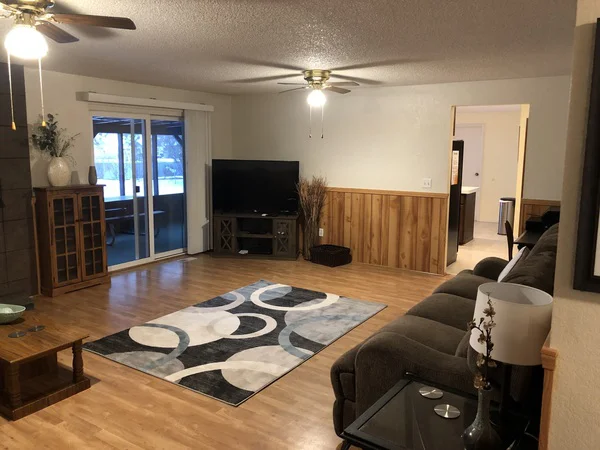
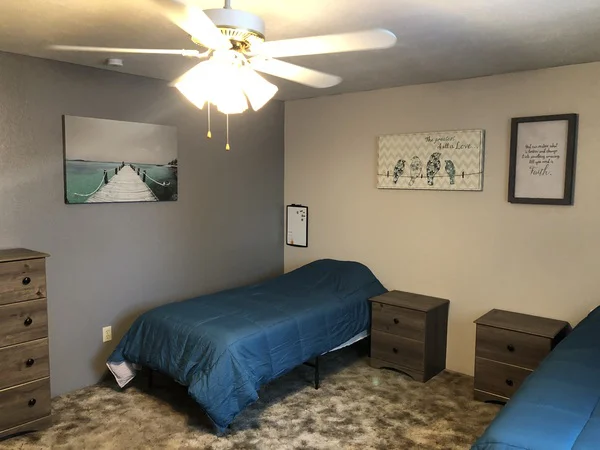
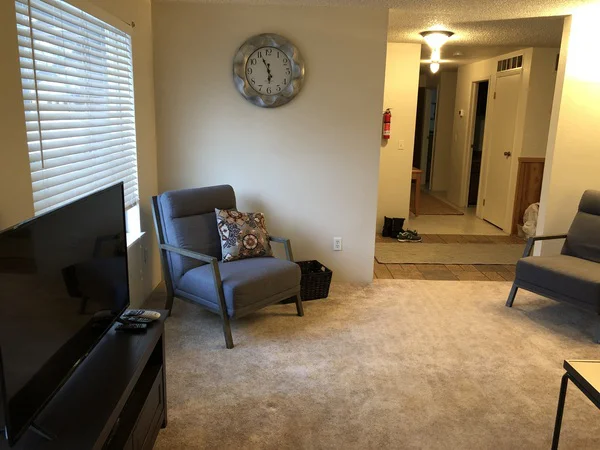
Phoenix House is a recovery home serving men and women over the age of 18. We provide a structured and supportive home with oversight and support. We do not provide treatment services on site.
Mission
Our mission is to positively impact the lives of each individual we have the honor of serving.If you are a resident of Phoenix House, welcome!! We are so happy that you selected us! This manual will be displayed in each home to be a helpful guide to our residences.
Contents
Emergency Contact Information
Phoenix House Team Leader: Chris Mecham, 208-918-8200, chrismecham@icloud.com Home Owner: Ryan York, 253-376-9744, ryan@boisesoberliving.com Your House: [House / Phone / Email] Police: 911 Fire: 911 Idaho Care Line: dial 2-1-1 Poison Control Centers: 1-800-222-1222 Power Company: 1-208-388-2323 Gas Company: 1-800-548-3679 Idaho Suicide Prevention Hotline: 1-800-564-2120 Or Regional Mental Health Crisis Line: 1-208-334-0808
Emergencies
Fire Safety Procedures
- Fire Drills will be conducted monthly to review the protocol for residents if the fire alarms sound in their houses. The drill reviews evacuation routes for each room in the houses, meeting places, and fire safety rules.
- Fire Safety Inspections are to be completed weekly and documented and filed.
What To Do In Case of an Emergency
- Call 911 in case of:
- Fire
- Violence or a threat of violence
- Suspicious persons hanging around the premises
- Burglary
- A life-threatening medical situation
- Chest pain
- Shortness of breath
- Suicide attempt
- Unconscious individual
- Injury in which there is a broken bone or bleeding that cannot be stopped
- Unable to wake someone
- Ingestion of toxic chemicals or substances
- Individual out-of-control
- Individual having hallucinations
- Individual having extreme allergic reactions
- Extreme paranoid behavior
After you call 911, call the team leader/owner and inform them of the situation. Then, move to a safe place to wait for the arrival of emergency assistance. DO NOT try to move an injured person, give First Aid or CPR unless you are qualified.
- Call the house manager/owner in case of:
- Drugs, alcohol, weapons on the premises
- Suspicion or knowledge of someone using/having used drugs/alcohol
- Plumbing problems or maintenance issues in the house
- Power out for more than half an hour
- Individual who may be in withdrawal having difficulties
- Curfew violations
Resident Rights and Responsibilities
Members have a right to be treated with respect and recognition of their dignity and need for privacy. Members have a right to participate with providers in making decisions regarding their treatment planning. Members have a right to candidly discuss appropriate or medically necessary treatment options for their conditions, regardless of cost or benefit coverage. Members have a right to file complaints, and appeals, and voice concerns over issues, including the organization, the care provided, and privacy violations. Members have a right to receive an accounting of disclosures, including copies of signed authorization to release information forms. The information will be made available as quickly as possible, but not later than 30 days after receiving the request. Members have a right without authorization to release PHI to request and obtain a copy of his/her PHI unless the PHI will pose a threat or do harm to the individual. Members are responsible for providing the information that the organization and its providers need to care for them to the extent possible. Members are responsible for following the plans and instructions for care that they have agreed upon with their providers. Members are responsible for participating to the degree possible in understanding their behavioral health problems and developing mutually agreed upon treatment goals. Members have a responsibility to read and have documentation regarding their benefits coverage. Members may make recommendations regarding the organization’s Member Rights and Responsibilities Policy.
Confidentiality
All information in this policy is to be considered confidential and will be handled in a manner as prescribed by company policies and state and federal laws.
House Rules
All residents receiving outside funding must utilize sign in sheets to document time in and out of the house daily. Beds are to be made upon awakening. Rooms are to be free of dishes and food waste at all times. Garbage cans in rooms are to be emptied frequently and not be overflowing. Clothes are to be washed frequently. Not working residents must leave the house and look for work no later than 9:00 am. Kitchen appliances, utensils, and dishes will be cleaned and returned to their respective places immediately after use. Countertops, stoves, tables, and microwave ovens will be cleaned after each use. No food or dishes will be left out overnight or during the day. Residents are not to get into refrigerators or cupboards that are not assigned to them for any reason. All rooms are subject to inspections at any given time. Residents are not permitted in any bedroom other than their own without the permission of the resident(s) occupying that room. They must also be accompanied by the permitting resident. Chores are to be completed daily. The House Manager will be responsible for assigning chores. Failure to complete an assignment may result in a fine. A general level of cleanliness of the house is required at all times, both inside and outside the residence. Curfew for New Residents is 10:00 p.m. during the 30-day probationary period. After the probationary period, the curfew will be extended to 11:00 p.m. Residents on Probation or Parole will abide by the curfew set by their Probation/Parole Officer. Missed curfews may result in a $25 fine. * PEER SUPERVISOR/HOUSE LEADER may allow some flexibility with work schedules or Sober Events with approval. No laundry is to be started after 8:00pm. The last load must be finished by 10:00pm. Machines running after house quiet time may be shut off. Unattended laundry may be placed in a garbage bag and taken out to the garage. The dryer lint screen will be cleaned after each use. Clothes are not to be left unattended in the washer or dryer. House quiet time is from 10:00 pm to 5:30 am. Any activity that disturbs another resident’s ability to sleep, i.e., phone conversations, TV, lights on, etc., is prohibited. The Television(s) in the main living areas must be off by 11:00 pm at the latest. If the TV is on after 10:00 pm, the volume must be 10 or lower so as not to disturb other residents. No meals are to be cooked in the oven or stovetop after 10:00 p.m. Microwave meals and uncooked meals are allowed—no cooking whatsoever after 11:00 p.m. Sleeping in common areas is prohibited. Garage doors are to be open during smoking. The garage door will not be open after 11:00 pm. Smoking after that time will be outside in the back of the residence—no ashes or butts on the garage floor, driveway, or backyard. Vaping is not permitted inside the house. Guest visiting hours are 12:00 PM to 8:00 PM. Guests cannot be under the influence of, or in possession of drugs or alcohol, and must submit to a UA upon request. Guests of the opposite sex are prohibited from entering any Phoenix House residence without the prior approval by the House Leader. Overnight guests are strictly prohibited. The only exception is children age 12 and under and with house leader or peer council PRIOR approval. Residents are required to wear appropriate clothing in and outside the residence at all times. All vehicles must have current tags and insurance, which must be verifiable. Vehicles will not be stored or worked on on the premises. Turn off lights, TVs, radios, etc., in rooms and common areas when not in use. Keep exterior doors locked at all times. Overnight or weekend passes or requests must be submitted to the PEER SUPERVISOR at least one week in advance. Authorization will be granted at the discretion of the PEER SUPERVISOR/COUNCIL. If a Peer Council is not established, authorization is required from the House Leader or assistant. A violation of any of the aforementioned rules may result in a fine of $25. You must see the PEER REPRESENTATIVE at least 1 time per month to discuss your recovery program. If there is no peer representative, you must discuss with house leader or assistant. No weapons of any kind will be allowed on the property under any circumstance. This applies to all residents and visitors on the property. Phoenix House is not, at any time, responsible for a resident’s personal items or belongings. Residents are responsible for the security of their own belongings and are to pack and carry their items or belongings when they depart the residence. If for any reason this does not occur, the resident may contact the House Leader or Phoenix House regarding the retrieval, storage, or disposal of said personal items and/or belongings. Phoenix House will not store personal items for longer than seventy-two (72) hours without prior approval by the House Leader or Phoenix House.
Abstinence Enforcement and Testing
The heart of the Phoenix House experience is the process of learning how to live a life free from drugs and alcohol. Requirements in this section support the important aspects of enforcing abstinence and of managing relapse situations. The use of any alcohol or any unauthorized mood-altering chemical is not allowed, either on or off the premises. Continuous sobriety is necessary for residents at Phoenix House. Phoenix House will utilize both regular UA analysis and random UA analysis. Random testing will be performed at the discretion of the house leader or peer council upon suspicion of drug or alcohol use.
Grievance Procedure
At Phoenix House, everyone has the right to lodge a complaint or express a concern about our facility, management, and/or services without fear of retaliation. We welcome complaints and view them as valuable opportunities to learn, adapt, and improve the services we provide our valued residents.
Step 1: Talk It Out (Informal Resolution)
Whenever possible, try to resolve the issue directly with the person involved. Many concerns can be addressed through honest, respectful conversation. If you need support, ask a Peer Leader or house manager to help facilitate.
Step 2: Peer Council
If Step 1 doesn’t resolve it, bring your concern to the Peer Council at the next house meeting, or request a private meeting with a Peer Leader. The Peer Council will listen without judgment, help identify a fair resolution, and document the concern if needed.
Step 3: Formal Grievance
If Steps 1 and 2 haven’t resolved the issue, submit a formal grievance to management. You may remain anonymous if requested. You can submit by email ( ryan@boisesoberliving.com), written note submitted to management, or by calling or texting (208) 918-8200. Please include your name (or submit anonymously), the nature of the concern, when it occurred, and what outcome you are looking for.
Step 4: Management Response
All formal grievances will receive a response within 5 business days. Management will acknowledge receipt of your grievance, investigate as appropriate, and inform you of the outcome. Safety or serious violations will be addressed immediately. No resident will face negative consequences for raising a concern in good faith. Retaliation of any kind is a serious violation of house rules and will be addressed immediately. You never have to put your name on feedback — we will always ask if you would like to remain anonymous before any concern is documented or shared.
Phoenix House Non-Discrimination Statement
Phoenix House does not and shall not discriminate on the basis of race, color, religion (creed), gender, gender expression, age, national origin (ancestry), disability, marital status, sexual orientation, or military status, in any of its activities or operations.
New Resident Selection Criteria
Admission Criteria
To be admitted to Phoenix House you must meet the following criteria:
- Be admitted voluntarily
- Be 18 years of age or older
- Be able to pass a drug and/or alcohol urine test
- Be medically stable. Any individual with ongoing medical problems, including dual diagnosis, may be accepted provided that they are addressing these problems with outside professional help, including medication management.
- Have adequate control over their behavior and assess not to be imminently dangerous to self or others.
- Express a sincere desire to recover from addiction to drugs or alcohol
- Be assessed as medically appropriate and free of any illness that requires isolation from others
- Have the capacity for active participation in all phases of the program
- Be ambulatory and meet personal needs without assistance.
- Have adequate resources to pay for the program.
Exclusion Criteria
Phoenix House is not currently accepting individuals with the following charges or convictions: sex offenses, domestic violence, violence charges, arson. And dickheads. If you are a dickhead, please do not apply. Phoenix house will provide referrals if a qualified resident is not accepted into our home. If we are full and unable to provide for an applicant, they have the option to be added to our waiting list and contacted once a spot is made available.
New Resident Requirements
Welcome to Phoenix House. Please assist your manager in completing the following forms: One Step New Resident Required Forms, Once Step admittance form. Next steps:
- Find the peer liaison (or assistant manager) and complete the New Resident Orientation: https://boisesoberliving.com/orientation/
- Go to https://boisesoberliving.com/resident — here you will find the resident handbook. Please take a moment and review the resident handbook. Direct any questions you have to the house manager and/or peer council.
- Identify and get to know your Peer Liaison, Peer Supervisor, and Peer Representative.
Be a Good Neighbor — Requirements
Recovery residences around the United States are facing community pressure to shut down and move their operations. It is vital to the recovery movement as a whole that we are exceptionally good neighbors to the individuals and families that we live next to. Here are some tips to be a great neighbor:
- Follow posted speed limits. Generally, 25 mph is an accepted speed. However, children and families are present, please lower your speed to 10 mph.
- Lower your car music. I get it….you maybe feelin’ those beats. But loud music in a neighborhood is pretty trashy. Turn it down a bit, but feel free to dance your ass off and wave nicely to the kids.
- Parking! Parking is always a challenge. We can have up to 12 cars at any time. Feel free to block your buddy in the driveway but please, under no circumstance, do not park in front of someone else’s home or driveway.
- Be friendly, smile, wave. You are not only representing Phoenix House, but the whole community of individuals in recovery. You know there is a lot of stigma out there so be a force for change. Let the neighbors know you are a human being. Kill em’ with kindness.
- No smoking or loitering in the front of the house. Please smoke and hang with your buddies in the back.
- Noise restrictions. You just passed level 59 in candy crush! Congratulations! We are happy for you, but the neighbors may not be so impressed. Please keep outside noise to a minimum so our neighbors can enjoy listening to the birds in their backyard.
Staff Positions and Job Descriptions
Each Phoenix Home is lead by: House leader – Paid Position (Optional) Peer Liaison – volunteer elected position Peer Supervisor – volunteer elected position Peer Representative – volunteer elected position
House Leader Job Description
Role Summary: The house leader is an individual with personal experience and living successfully in long term recovery. We are looking for individuals with a heart to serve others in their recovery journey. He/she will need to be both a mentor and manager who is highly organized with excellent communication skills. Job duties: Live full time in residence. Rent collection, rent deposit, new resident acquisition, onboarding paperwork, new resident orientation and setup, weekly house meetings, house plant management and maintenance, peer council or assistant manager management, house rules monitoring and enforcement, know and be accountable to Phoenix vision, values and ethics. Understand and implement the Social Model of Recovery. Understand and implement the Legendary Customer Service Model. Finally, the house leader is required to facilitate access to local community-based resources.
Peer Council Job Description
The Peer Council was created to balance the management responsibilities of the home, improve peer interaction, support and relationships. The peer council is elected by residents of the house every 3 months. The house manager assigns a position to the 3 candidates receiving the highest number of votes. Although not a paid position, the council is eligible for reimbursements. Peer Liaison – The peer liaison acts as the assistant manager and oversees the peer council. Their job duties include communication with the owner, assisting the manager, and performing the New Resident Orientation. Peer Supervisor – The peer supervisor is responsible for managing the chore list, making sure the house rules are followed. Peer Representative – The peer representative is responsible for ensuring the rights of each individual are protected, conflict resolution, and performing combustion sessions.
The Phoenix House Management Model
The Phoenix House model is a combination of our vision and values, the Social Model of Recovery, and Legendary Customer Service.
Phoenix House Vision and Values
Our vision and values were constructed in 2017 to guide our decision-making and how we strive to conduct ourselves each and every day. Vision Statement: Phoenix House works to make a deep and positive impact on EACH individual we have the honor of serving. Values:
- Culture of love and service
- Integrity and honesty
- Invest in others
- Sharpen the saw (aka continually invest in making ourselves better)
The Social Model of Recovery
The Social Model of Recovery is a model designed for recovery homes with peer reviewed support as the best model to improve the outcomes of residents striving for long term recovery. The components of the Social Model are:
- Staff as Recovery Peers
- Staff perspective on addiction as a disease
- Staff as Servant Leaders
- Resident Empowerment
You can read more about this model at: https://narronline.org/wp-content/uploads/2014/09/Maximizing-Social-Model-Principles-in-Residential-Recovery-Settings.pdf
Legendary Customer Service
Ken Blanchard has long been recognized as an authority in business leadership and customer service. We use his book, Legendary Customer Service, in our training manuals and monthly leadership meetings to guide and inspire our interactions with each individual we have the honor of serving. The principles taught in this book are summarized in the acronym ICARE:
- Ideal Customer Service
- Culture
- Attentiveness
- Responsiveness
- Empowerment
We will do everything in our power to address the problem and, if necessary, take corrective action. The goal and purpose of our team is to provide you, the resident, excellent service and an amazing environment to help you reach your goals. Your sobriety is our #1 goal!!
Resident Volunteer and Paid Work Policies
Voluntary Paid Resident Employment
Paid work arrangements are completely voluntary. Residents who decline voluntary work arrangements will not be subject to any consequences due to declining work. Residents who accept paid work will not be treated more favorably than residents who do not. All qualified residents are given equal opportunity for available work. Paid work for the operator or staff does not impair participating residents’ progress toward their recovery goals. The paid work is treated the same as any other employment situation. Wages are commensurate with marketplace value and at least minimum wage. The arrangements are viewed by a majority of the residents as fair. Paid work does not confer special privileges on residents doing the work. Work relationships do not negatively affect the recovery environment or morale of the home. Unsatisfactory work relationships are terminated without recriminations that can impair recovery.
Confidentiality and Resident Records
Summary
Each resident of the Phoenix House confidentiality is protected by law. That means that you are not allowed to talk to anyone outside of the house, about anyone in the house, without their express permission. The right to confidentiality of all residents regarding verbal and written information will be protected and compliance with federal and state laws will be met.
- All house managers, residents and volunteers of Phoenix House will adhere to the confidentiality laws and procedures as set forth in Federal Law 42 CFR, Part 2 Confidentiality of Alcohol and Drug Abuse Patient Records.
- Residents will be informed upon admission of their rights to confidentiality and be given the opportunity to sign consent forms for the release of information. Residents may choose whether or not to sign and may revoke a release at any time (see attached forms).
- Upon admission the house manager/owner will explain and residents will sign a “Resident Confidentiality Agreement”. This agreement is for the purpose of ensuring confidentiality among the residents and building trust.
- To protect resident privacy, their image and/or any identifying language will be used on social media or advertising material.
- Resident files (both current and past) will be kept digitally on One Step Software, a secure database that is password protected. These files will be under the direct maintenance and supervision of the house owner. Only the Owner and House manager will have access to files.
The files will be utilized and viewed only by Phoenix House members unless: 1. The resident whose name appears on the file requests to view their file, 2. The resident has signed a release of information form for the specific person who has requested to view the file, or any parts thereof, in which case a statement forbidding further disclosure will be stamped on each page released; 3. A court order is furnished requesting the file, or any part thereof, and; 4. A situation in which the resident’s life is in danger and the file or a portion thereof would aid in the treatment of the resident. (This is the copy of the confidentiality agreement that every resident has signed and is on digital record).
Resident Confidentiality Agreement
The confidentiality of recovering persons living in a Recovery Residence is protected under Federal Law 42 CFR, which protects them from anyone outside of the residence having knowledge of their participation in the recovery residence without the resident’s specific permission. No information regarding a resident of Phoenix House may be released to anyone outside of the program unless:
- The resident has signed a consent form to that person/agency;
- A court order is issued to Phoenix House regarding information on the resident;
- Medical personnel require the information in a medical emergency or,
- The resident threatens to harm him/herself or someone else.
Federal Law does not protect a resident if they commit a crime against anyone at Phoenix House. Also, Federal Law does not restrict sharing of information regarding reported child abuse/neglect to appropriate State and local authorities. These laws apply not only to the house manager/owner, member and volunteers of Phoenix House, but to the residents as well. I agree to not reveal to anyone outside of the Phoenix House the name, identity, or description of another resident. I also agree to not discuss the content of conversations or groups with anyone outside of Phoenix House. This includes sharing at 12-Step meetings. I agree to inform house manager/owner if any of my peers reveal any information about themselves or another resident that may be a cause for concern.
Resident Relapse Policy
A relapse is a serious event, and Phoenix House’s response is guided by the Social Model of Recovery and NARR standards — the goal is safety, accountability, and continuation of recovery where possible. The following process applies:
Step 1 — Report & Safety
Report to the house manager or Peer Council immediately. Safety of the resident and the house comes first. If the resident is impaired, call the house manager/owner. If there is a medical emergency, call 911.
Step 2 — Peer Council Review
Peer Council meets to review the incident. The resident has the opportunity to speak. Circumstances are considered (self-report vs. discovery). Management is notified for all relapse events.
Step 3 — Decision
Outcomes range from a recovery plan to administrative discharge. Self-reporting is always viewed favorably. Re-admission may be possible after treatment. No clinical or diagnostic decisions are made by staff.
Step 4 — Documentation
The incident is documented in the resident’s file. All actions are taken with the resident’s dignity intact. Honesty and self-reporting are always viewed more favorably than discovery. If a resident is struggling, they are encouraged to reach out before it becomes a crisis.
Re-Admittance
Following the Peer Council Review and Decision described above, the leadership team as well as the members of the home need to meet to determine, democratically, if the resident should be allowed to re-enter the home. Re-admittance should be based on the:
- Sincerity of the resident to commit to a recovery plan
- The details of their recovery plan
- Resident committing to a 30 day probationary period.
Post Re-Admittance Probationary Period
If the resident is allowed to re-enter the home, they will need to commit to a probationary period of 30 days. Including:
- 10pm curfew
- No overnight passes allowed
- Increased meetings attendance. Ideally, 30 meetings in 30 days.
Medication Policy
All prescribed medications must have a current doctor’s orders. All opiate-based medications are prohibited unless prior approval is obtained by the house manager. We do accept individuals taking suboxone and methadone when carefully monitored by a medical professional and supplies are locked and secure. All medications are to be kept in a secure lockable box provided by Phoenix House in the resident’s room. Any resident caught sharing, selling medication(s), or possessing medication(s) that is not prescribed to them, or that was not made known to the House Manager, will be evicted. Lockboxes are provided by Phoenix House with a $10, refundable deposit.
Housing Condition and Requests for Maintenance
Please notify the house manager and/or owner if any maintenance issues require our attention. We love our homes and want you to love them as well. All maintenance issues will be addressed without delay. Thank you!!
Resources
Phoenix Multisport: www.thephoenix.org or download the app. Peer Wellness Center: 1-208-991-3681, https://www.peerwellnesscenter.org Understanding Drug Addiction: https://www.ncadd.org/about-addiction/drugs/understanding-addiction Drug Rehab: DrugRehab.com Alcohol Awareness Council – AAC: www.alcohol.org Alcoholics Anonymous: http://www.idahoarea18aa.org Southwest Idaho – Phone: 1-208-344-6611 Al-Anon/Alateen: http://www.al-anon-idaho.org Narcotics Anonymous: http://www.sirna.org Community Resources: https://www.communityresourcesidaho.org, https://www.communityresourcesidaho.org/distrcit-4-resources Department of Health and Welfare: http://www.healthandwelfare.idaho.gov Suicide Prevention Hotline: http://www.suicide.org/hotlines/idaho-suicide-hotlines.html Idaho Care Line: http://211.idaho.gov St. Vincent De Paul – www.svdpid.org Self-Rescue Manual – www.selfrescuemanual.com Homeless Shelters Directory – www.homelessshelterdirectory.org Recovery Idaho: www.recoveryidaho.org